When You Should and Shouldn’t Transfer Points
This is general information, not financial or travel advice. Loyalty programs change rules frequently. Confirm award pricing and availability with the program before you transfer anything.
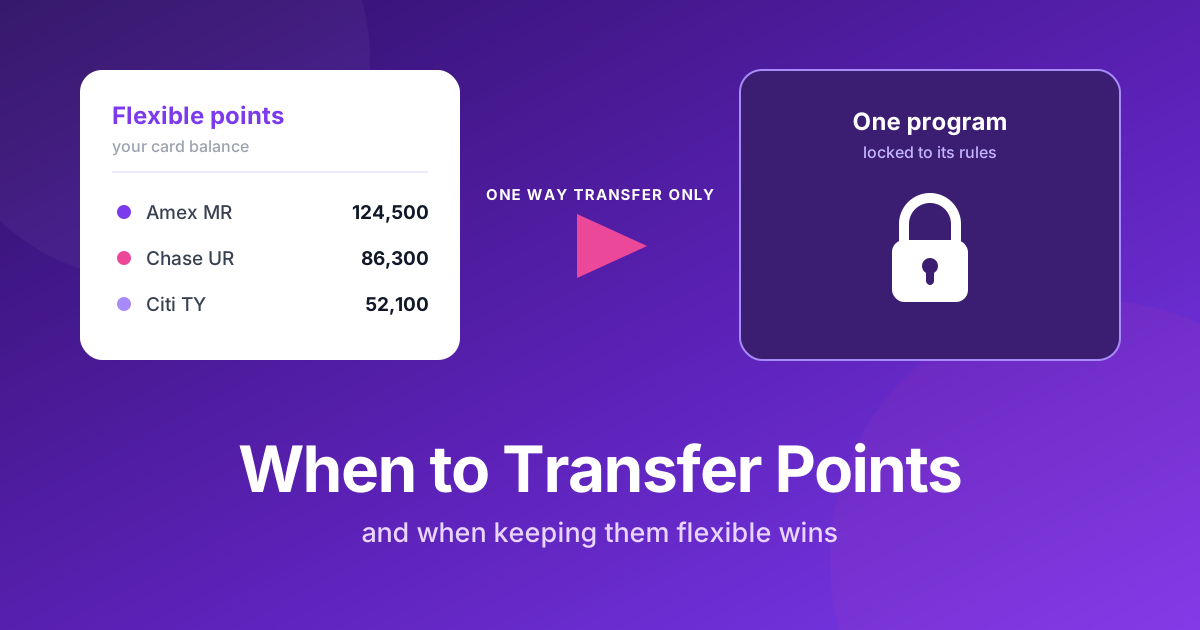
Transferring credit card points to an airline or hotel is the single highest-value move in the points hobby. It is also the most common expensive mistake. Both things are true, and the reason is the same: a transfer is a one-way door. Once you move your Amex, Chase, Citi, or Capital One points into a specific airline or hotel program, you cannot move them back.
Most points content cheers transferring on, because the success stories are exciting. A business-class seat to Europe for 60,000 miles that would have cost $4,000 in cash makes a great screenshot. Those redemptions are real. But the quiet truth underneath them is this: for most people, most of the time, the right answer is not yet. This post is the framework for knowing which situation you are actually in before you press the button.
What a transfer actually is, and why it is one-way
The big flexible currencies, American Express Membership Rewards, Chase Ultimate Rewards, Citi ThankYou, and Capital One miles, are valuable precisely because they are not committed to anything yet. They sit in your card account as an option. You can move them to any of that card’s partner airlines or hotels, usually at a 1 to 1 ratio, whenever you find a redemption worth booking.
The moment you transfer, that option is spent. Your flexible points become one specific airline’s miles, bound by that airline’s award chart, that airline’s fees, and that airline’s expiration rules. There is no transfer-back button at any program. So the entire decision comes down to one question: are you trading your flexibility for something concrete and better, or are you giving it up for nothing?
When you SHOULD transfer
The green light is narrower than most people think. Transferring is the right move when all of these are true at the same time:
- You have a specific award in mind. A real flight or hotel night, on specific dates, not a someday-maybe.
- You have confirmed the award space is available right now. You have seen the actual seat or room bookable in the partner program, not just assumed it exists. Award space disappears, and miles stranded in a program with no seat to book are worth less than the flexible points you started with.
- The partner’s price beats your alternatives. After any transfer bonus, the partner award costs fewer points than booking through your card’s travel portal, through a different transfer partner, or paying cash and keeping the points.
When those line up, transfer and book, ideally within minutes of confirming the space, because award seats and award pricing can both move while you hesitate. A live transfer bonus on top of a confirmed, available, well-priced award is the textbook best-case moment to act. The bonus is the cherry, not the reason. The confirmed redemption is the reason.
When you SHOULDN’T, and the mistakes that cost the most
These are the patterns that quietly burn value. Each one is common, and each one starts with a transfer that felt smart in the moment.
1. Transferring on a bonus, with no booking in mind
A bank announces a 30 percent transfer bonus and it feels like free money, so people move a big balance to lock in the rate. Then the award space they imagined never materializes, the program devalues, or plans change. Now they are holding a pile of one airline’s miles instead of flexible points that could have gone anywhere. Speculative stockpiling on a bonus is the single most expensive habit in the hobby. A bonus on points you do not have a use for is not a deal, it is a trap with good marketing.
2. Transferring to the wrong program
The same flight can often be booked through several different partners at very different mileage prices. Transfer to the first program that comes to mind and you may pay far more miles than the same seat costs through another partner you also could have used. The mistake is committing before checking which partner actually prices your specific redemption lowest. Once the points have moved, you have lost the ability to choose.
3. Transferring into a program that will expire your miles
This is the one that hurts the most, because the loss is total. Some programs expire your miles on a hard clock that no amount of activity can reset. If you transfer in, then your trip slips by a few months, you can lose the entire balance. We cover this in detail below, because it is the risk people understand the least.
4. Transferring when cash was the better deal
Sometimes the award costs a lot of miles and the cash fare is cheap, or the taxes and fuel surcharges on the award are high enough that you are not saving much. Transferring points into a mediocre redemption spends a scarce, flexible asset to save a small amount of money. If the math is close, keeping the points and paying cash is often the smarter call, because you keep the optionality for a better redemption later.
The expiration trap, in detail
This deserves its own section because it is where transfers turn into outright losses. While your points sit in a credit card program, they generally do not expire as long as your account is open and in good standing. Membership Rewards, Ultimate Rewards, ThankYou, and Capital One miles all work this way. That is a quiet but real form of insurance: your balance is safe while you decide.
The instant you transfer, that insurance is gone and you inherit the partner’s rules. Some of the most tempting transfer partners have the harshest expiration policies of all.
| Program | Expiration rule | Does activity reset it? |
|---|---|---|
| Singapore KrisFlyer | Hard expiry 36 months after the miles are earned | No. Only a one-time paid extension, or PPS Club status, keeps them |
| Emirates Skywards | Hard expiry roughly 3 years after earning, at the end of your birthday month | No. Only a paid extension, a cobranded card, or Platinum status keeps them |
| Flying Blue (Air France KLM) | Expire after 24 months of inactivity | Yes. Any qualifying activity extends the whole balance 24 months |
| American AAdvantage | Expire after 24 months of inactivity | Yes. Any earning or redeeming resets the clock |
| United, Southwest, JetBlue, Virgin Atlantic | Do not expire while the account is open | Not applicable |
| Card currencies (Amex, Chase, Citi, Capital One) | Do not expire while the account is open | Not applicable |
Read the top two rows again. KrisFlyer and Emirates are among the most popular transfer targets for premium-cabin redemptions, and both run a hard clock that ordinary activity does not extend. Transfer a large balance to KrisFlyer for a trip eleven months out, have the trip pushed past the three-year mark on the oldest miles, and they are simply gone. The points were perfectly safe sitting in your card account. The transfer is what put them on a timer.
The rule that falls out of this: never transfer into a hard-expiry program until you are ready to book, and ideally not until the award is held. If you want the deeper version of which programs expire and how to keep them alive, we wrote a full program-by-program breakdown.
The three protections you give up the moment you transfer
Every transfer, even a good one, costs you three things at once. Naming them makes the decision concrete:
- Flexibility across all partners. Flexible points can go to any of your card’s partners. Committed miles can go to exactly one program. You trade every other future option for this one.
- Insulation from a single program’s devaluation. A balance held in card points is not exposed to any one airline’s award-chart changes. The moment you transfer, a devaluation in that specific program can shrink what your miles buy, sometimes overnight and without notice.
- Protection from that program’s expiration rules. As the table shows, card points generally do not expire while your account is open. Transferred miles live or die by the partner’s clock.
None of this means never transfer. It means a transfer should buy you something clearly worth those three costs. A confirmed, available, well-priced redemption is worth it. A vague feeling that a bonus is too good to pass up is not.
The takeaway
Keep your points flexible until you have a specific, confirmed, better-value redemption in front of you. Flexibility is the entire value of a transferable currency. Spend it deliberately, on a real booking, not speculatively on a bonus or a hunch.
One practical thing makes every part of this easier: actually knowing what you hold. A surprising share of the expensive mistakes above come down to not having a clear picture of your balances. People transfer points to one program while forgetting a different currency they own prices the same award lower. People chase a bonus on a balance they did not realize was about to be enough on its own. People let miles expire in a program they forgot they had funded through an old transfer. You cannot make a good transfer decision about points you have lost track of.
That is the problem PointsPulse exists to solve. It shows every balance you hold across your card programs, airlines, and hotels in one place, and warns you before anything is about to expire, so the transfer decision starts from a clear, current picture instead of a guess. It reads your balances from the loyalty sites you already log into, and it never stores your passwords to do it.
Know what you hold before you transfer a single point
PointsPulse tracks every balance in one dashboard and warns you before points expire. Start free, no credit card required.
Try PointsPulse free